
Immuno-modulatory therapies using compounds that target cell receptors require to measure receptor engagement on specific cell populations in treated patients. This biomarker is critical in clinical trials to determine drug efficacy in patients and pharmacodynamic. Measuring receptor engagement, also known as receptor occupancy (RO), by flow cytometry can be challenging and requires careful planning to support robust, reproducible clinical testing.
Importance of Reproducibility
Precision for Medicine has process to ensure reproducibility of the results across our labs, operators and instruments. For clinical flow cytometry assays, standardization of sample handling, instrument setup, SOPs and analyst training minimizes variability and supports confidence in clinical data.
Introduction to Receptor Occupancy Assays
RO is a flow cytometry-based pharmacodynamic (PD) that quantifies drug binding to a specific cell-surface target.
As RO assays are drug and target specific, the assay format should be selected based on study objective, receptor biology, therapeutic modality, and reagent availability. Additionally, RO may change ex-vivo through receptor internalization, downregulation, or target-cell loss, therefore specimen stability, anticoagulant and staining protocols should be evaluated. Assay approaches include free receptor, total receptor, and direct bound-receptor formats (Figure 1).
Free Receptor |
Total Receptor |
Bound Receptor |
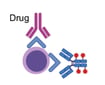
|
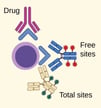
|
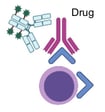
|
Figure 1. Receptor Occupancy (RO) Assay Formats
Designing and Developing an RO
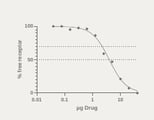
Successful RO assay development requires a clear understanding of target biology, including mechanism of action, target cell population, receptor expression, and specimen stability. These factors guide assay design, reagent selection, calibration curve development and overall assay performance. During assay design, PfM confirms target abundance and saturation, evaluates clones and fluorochromes for drug competition or detector interference and establishes a calibration curve under saturating drug conditions to quantify RO in clinical samples.
In parallel, assay controls, instrument standardization and gating strategies must be optimized to ensure consistent and reproducible measurement of receptor occupancy (Figure 2).
Specimen stability, including the use of blood stabilizers and logistics should be also evaluated during the development of the RO to allow transfer of the assay across sites.
Biology |
Experiment set up |
Validation |
|
|
|
Determining Drug IC50 |
Controls |
Validation |
|
|
|
Figure 2. Key considerations for RO assay development and validation
Validating an RO assay
Validation requirements should be aligned with the assay’s intended, study phase, endpoint and reporting expectations. For exploratory applications, validation typically focuses on reproducibility, operator consistency, and sample stability. For assays supporting secondary endpoints, additional characterization of assay performance, such as linearity and sensitivity is required to support regulatory reporting (Figure 3).

Key takeaways
The ability to evaluate receptor expression and drug occupancy on specific cell subsets is critical throughout the development of immuno-modulatory therapies. Developing, optimizing, and validating a robust, reproducible RO assay facilitates dose selection, safety monitoring, and pharmacological interpretation, and clinical decision-making.
Discover how Precision for Medicine supports researchers in obtaining therapeutic insights through receptor occupancy assays by flow cytometry.