-
Genomics
Interrogate genomic alterations to guide precision development decisions.
Apply genomic profiling to identify somatic and germline variants that inform target validation, patient stratification, resistance mechanisms, and companion diagnostic strategies—enabling confident decision‑making from early translational research through late‑phase clinical development.
Application
-
Whole genome and whole exome sequencing
-
Single cell genomics
-
Amplicon and capture-based enrichment for target characterization
-
Minimal residual disease (MRD) detection
-
Mutation detection, genotyping
-
Vector copy number analysis
-
Biodistribution and shedding (gene therapy)
-
Liquid biopsy via circulating tumor DNA (ctDNA)
Technologies
- NGS
- ddPCR
- qPCR
- FISH/ISH
- MSK-IMPACT/ACCESS
- CLIA-validated custom NGS assays for patient enrollment
-
Epigenomics
Capture stable regulatory biology to power robust immune monitoring and stratification.
Deploy bisulfite methylation sequencing to comprehensively measure the methylome and reveal epigenetic regulation underlying cell identity and disease state. Extend insight with Epiontis®, a novel immune monitoring platform using DNA methylation markers uniquely specific to immune cell types, enabling precise, reproducible quantification of immune composition across complex samples and longitudinal studies.
Application
Technologies
-
Epiontis ID
-
Bisulfite sequencing
-
Transcriptomics
Quantify gene expression programs to demonstrate biological response.
Leverage transcriptomic analyses to measure pathway modulation, immune activation, and pharmacodynamic effects across tissues and blood—linking mechanism of action to clinical outcomes and accelerating proof‑of‑mechanism in early‑phase trials.
Application
-
Whole transcriptome sequencing
-
Gene expression profiling
Transgene expression analysis
-
T-cell receptor (TCR) and B-cell receptor (BCR) clonotyping
-
Single Cell Transcriptomics
Technologies
-
RNASeq
-
Single cell RNASeq
-
NanoString nCounter
-
RT-qPCR
-
RT-ddPCR
-
RNAScope-ISH
-
Proteomics
Measure functional protein biology to confirm target engagement and pathway impact.
Utilize proteomic approaches to quantify signaling proteins, cytokines, and biomarker networks that directly reflect drug activity—strengthening translational hypotheses and supporting biomarker‑driven endpoint strategies across development phases.
Application
-
Whole transcriptome sequencing
-
Gene expression profiling
-
Transgene expression analysis
-
T-cell receptor (TCR) and B-cell receptor (BCR) clonotyping
-
Single Cell Transcriptomics
Technologies
-
RNASeq
-
Single cell RNASeq
-
NanoString nCounter
-
RT-qPCR
-
RT-ddPCR
-
RNAScope-ISH
-
Cytomics
Define immune cell composition and function with clinical‑grade precision.
Apply flow cytometry and cell‑based immune monitoring assays to characterize immune populations, activation states, and functional responses—enabling clear assessment of pharmacodynamic effects, safety signals, and response biology in immunology‑driven programs.
Application
-
Immune phenotyping
-
Cell classification
-
Pharmacokinetics (PK)
-
Pharmacodynamics (PD)
-
MRD detection
Technologies
-
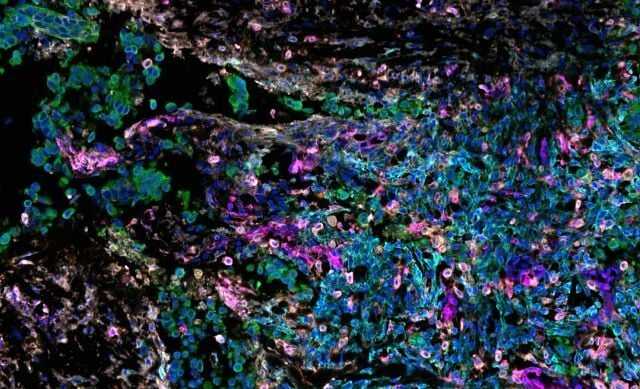
Spatialomics
Preserve tissue context to explain response heterogeneity.
Integrate spatially resolved molecular profiling with histopathology to map gene and protein expression within intact tissue architecture—revealing cell‑cell interactions and microenvironmental drivers that inform indication selection and combination strategies.
Application
Technologies
-
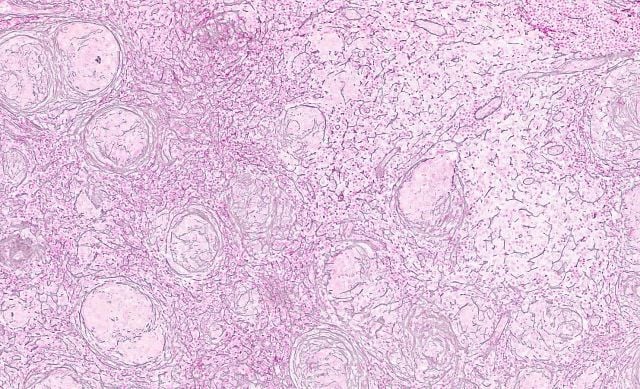
Pathomics
Transform tissue pathology into quantitative, decision‑ready biomarkers.
Apply advanced histopathology and digital pathology analytics to extract objective, scalable features from tissue architecture and biomarker staining—supporting deep biomarker profiling with quantitative measurements for tissue histopathology
Application
-
End-to-end digital pathology workflows
-
Quantitative Al-powered pathology
-
Pre-screening for validated downstream output
-
Real-time access to sponsor sample viewing and sharing
Technologies