
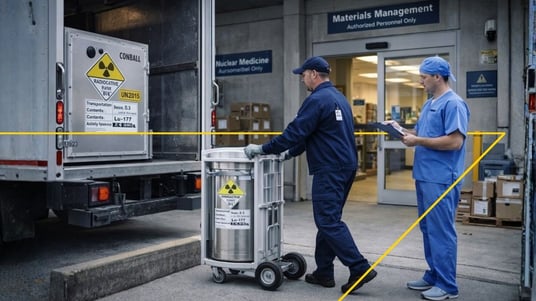
Running a radiopharmaceutical clinical trial is a race against time
It's a race in which even a minor delay can undermine patient schedules, imaging windows, and ultimately, data integrity. With some imaging agents carrying half‑lives measured in minutes, operational discipline becomes just as important as scientific rigor. And the stakes are only rising.
The global radiopharmaceuticals market is projected to grow from $9.07 billion in 2023 to $26.51 billion by 2031,1 intensifying demand for partners who can manage the timing, safety, and regulatory demands unique to these studies.
At Precision for Medicine, we’ve spent years building the specialized infrastructure, training, and operational models required to deliver radiopharmaceutical trials reliably at scale.
The Time-Critical Nature of Radiopharmaceutical Research
Unlike traditional oncology trials where investigational products can be manufactured and stored ahead of time, radiopharmaceutical trials follow the clockwork of physics and radiochemistry.on a precise schedule dictated by physics.
Consider a typical morning at a trial site:
The radiopharmaceutical must be synthesized at exactly the right time, quality-tested, transported under controlled conditions, and administered to patients within a specific window, all while managing multiple appointment schedules and coordinating imaging equipment availability.
This intricate choreography repeats daily, with each step requiring flawless execution.
Upfront Regulatory and Licensing Considerations for Radiopharmaceutical Studies
Before a trial can begin, sites must obtain specific certifications, including Nuclear Regulatory Commission (NRC) licenses or country-specific equivalents. Each facility must also demonstrate robust radiation safety programs and specialized handling protocols that meet stringent regulatory requirements.
As you might imagine, documentation in these trials also extends far beyond standard protocols. Teams must maintain detailed records tracking every aspect of the investigational product's journey, from transportation conditions and timing to storage parameters, radiation monitoring, and disposal procedures. The heightened level of scrutiny surrounding these materials demands sophisticated systems and expertise to ensure compliance while maintaining operational efficiency.
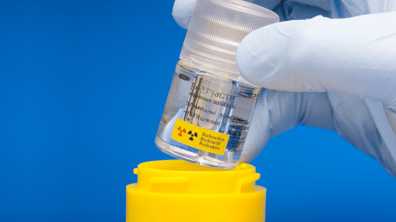
Time-Sensitive Operations: Why Precision Matters
Understanding these challenges, Precision for Medicine invested in developing specialized capabilities to help sponsors navigate these precision-driven studies.
An Example Day in a Radiopharmaceutical Trial
-
5:00 AM: Radiopharmacy begins synthesis
-
6:30 AM: Quality testing and dose preparation
-
7:00 AM: Transport to clinical site begins
-
7:30 AM: First patient dose administration
-
7:45 AM: Initial imaging procedures
-
8:00 AM: Second patient preparation begins
Disruptions to this carefully orchestrated schedule cascade throughout the day. A 30-minute delay in radiopharmaceutical synthesis can result in missed imaging windows for multiple patients, potentially invalidating an entire day's data while driving up costs by thousands of dollars. In multi-center trials, these risks multiply across sites, making precise coordination essential for study success.
Patient retention is critical in radiopharmaceutical trials. Strategies include multilingual education, appointment reminders, and caregiver coordination to reduce no-shows and maintain protocol integrity.
This is why Precision for Medicine has developed specialized protocols and contingency planning specifically for radiopharmaceutical trials, helping sponsors avoid these costly disruptions.
Strategic Approaches for Complex Radiopharmaceutical Trial Management
Successfully managing radiopharmaceutical trials requires specialized strategies that go beyond standard clinical operations. At Precision for Medicine, our approach combines deep operational expertise with continuous learning from the front lines of this dynamic field. The foundation begins with comprehensive site assessment, evaluating not just basic capabilities but the intricate requirements specific to radiopharmaceutical handling. This includes verifying specialized equipment, reviewing radiation safety protocols, and ensuring proper licensing is in place.
Documentation management takes on heightened importance in these trials. Teams must implement systems that capture and track time-sensitive data while maintaining radiation safety compliance records. This requires specialized templates and monitoring processes designed specifically for radiopharmaceutical research.

Five Critical Success Factors for Radiopharmaceutical Trial Partnerships
1. Specialized Expertise
- Dedicated Radiopharma Excellence training program
- Team members trained in the latest alpha and beta emitter applications
- Advanced understanding of half-life optimization strategies
2. Risk Mitigation
- Proactive identification of potential delays
- Established contingency protocols
- Continuous compliance monitoring
3. Operational Excellence
- Accelerated site activation
- Streamlined regulatory submissions
- Expert logistics coordination
4. Patient Engagement & Retention
- Multilingual educational resources to address “radioactivity”
- Caregiver involvement strategies to improve adherence
- Ongoing communication to maintain patient confidence
5. Quality Assurance
- Validated documentation systems
- Specialized training programs
- Real-time performance monitoring

What's Next in Radiopharmaceutical Clinical Research?
The radiopharmaceutical field is entering an exciting new era. Novel alpha-emitting therapeutics are showing promise in treating resistant cancers, while next-generation molecular imaging agents are enabling earlier, more precise diagnostics. These innovations bring new operational complexities, shorter half-lives, more stringent handling requirements, and the need for even more precise timing in trial execution.
Going forward, success will require more specialized knowledge, proven systems, and experience in managing increasingly sophisticated trial requirements. Organizations must stay ahead of both scientific advances and operational challenges to bring these promising therapies to patients efficiently.
Accelerating Innovation in Radiopharmaceutical Development
As the radiopharmaceutical field continues to advance, Precision for Medicine is committed to staying at the forefront, investing in specialized training, developing novel protocols, and building the expertise needed to bring these promising therapies to patients efficiently. The radiopharmaceutical field continues to expand, from advanced PET imaging agents to targeted alpha-emitting therapies. Each innovation brings its own operational complexities, making expert trial management more crucial than ever.
Precision teams have specialized expertise in managing the time-sensitive protocols, navigating regulatory requirements, and coordinating complex imaging procedures to accelerate development timelines for radiopharmaceutical clinical trials.
For strategic and logistical confidence on your next radiopharmaceutical study, partner with Precision.
-
Explore

Next-Gen Oncology CRO Services
Expedite your targeted oncology therapy with a CRO rooted in developing novel therapies and delivering commercial success.Next-Gen Oncology CRO Services
Expedite your targeted oncology therapy with a CRO rooted in developing novel therapies and delivering commercial success. -
Explore

Navigate Regulatory Affairs with Precision
Precision delivers deep strategic insight with operational excellence in regulatory affairs, guiding sponsors through clinical development, registration, and market access.Navigate Regulatory Affairs with Precision
Precision delivers deep strategic insight with operational excellence in regulatory affairs, guiding sponsors through clinical development, registration, and market access. -
Explore

Speak with an Expert
Contact our team to start your partnership with Precision.Speak with an Expert
Contact our team to start your partnership with Precision.
Reference
- Tracy D. Report: Radiopharmaceutical Market Expected to Reach $26.51 Billion by 2031. Pharm Exec. 2024; October 25. Available at: https://www.pharmexec.com/view/report-radiopharmaceutical-market-expected-reach-26-51-billion-2031


