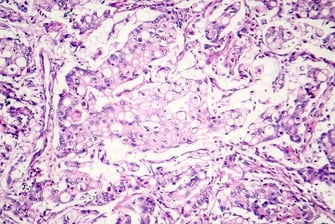
How a future IHC Based Companion Diagnostic Reached Clinical Trial Readiness in Six Months
In regulated diagnostics, the calendar leaves little room for drift. A sponsor needed an immunohistochemistry (IHC)-based clinical trial assay targeting a transmembrane protein transferred, validated, and submission-ready against an aggressive European timeline.
Precision for Medicine’s (Precision) Winston-Salem laboratory successfully delivered a full Design History File (DHF) and analytical validation package to support an IDE application approval in the US and Performance Study Approvals in the EU in roughly six months, work that typically takes nine to twelve. The final package supported an Annex XIV submission to French authorities just one business day past the original target, even after a client-driven delay. The work showed how Design Control can help teams mitigate risk while protecting scientific rigor and quality documentation under tight timelines.
Background & Challenge: Recovering a Regulated Study Under Compressed Timelines
The program centered on a targeted oncology therapy in clinical development for non-muscle invasive bladder cancer (NMIBC). It required an immunohistochemistry (IHC) assay transferred, validated, and documented under design control to support clinical use and European submission planning.
When Precision was engaged, the program had already entered a critical recovery phase as it was facing significant pressure on the timeline. Prior deliverables were behind, and their European clinical trial timelines created an urgent need for strategic execution and coordination. The contract was executed in early December 2025, and the mandate was clear: transfer the assay to the Winston-Salem Laboratory, complete a CLIA-compliant validation, build a full Design History File, and enable a performance study application to France on a timeline far shorter than the norm for this kind of work.
At project kickoff, the Precision team quickly identified flagged key risks and took action to address them. Early review of supporting documents enabled parallel workstreams, helping to protect the project timeline.
|
Therapeutic Area |
Oncology |
|
Indication |
Non-Muscle Invasive Bladder Cancer (NMIBC) |
|
Study Phase |
Early-phase clinical development |
|
Study Design |
IHC companion diagnostic — assay transfer & CLIA validation under Design Control (rescue) |
|
Project Mandate |
Assay transfer, CLIA validation to IDE and IVDR levels, Validation report, DHF, performance study application, IDE |
|
Clinical Products |
Histology, Pathology, Global Project Management, Quality, Regulatory, Biomarker Lab Services |
Strategic Mobilization: Standing Up a Rescue Under Design Control
The sponsor needed momentum restored without sacrificing the controls that a regulator demands. Precision mobilized global and site teams immediately after contract execution and committed to a Design Control framework from day one.
The goals were demanding but specific:
- Transfer the IHC assay to the Winston-Salem laboratory without losing time.
- Execute a CLIA-compliant analytical validation package to support clinical use.
- Build a full DHF and Design Control documentation for audit readiness.
- Prioritize and assemble the device performance study application for France (ANSM).
- Submit within the compressed six-month window from contract award.
- IDE application development and submission.
- A device performance study application supporting the Winston-Salem IHC clinical trial assay was successfully submitted to the French authorities just one business day after the target date established at project kickoff, despite a client-driven delay.
- A full DHF and analytical validation completed in roughly six months, work that typically spans nine to twelve.
- A demonstration of Design Control rigor, operational agility, and cross-functional execution under real deadline pressure.
“That’s part of the services we offer for this program. We’re cutting those tissues, testing them on day zero, and pulling a cohort at regular intervals to confirm that the protein remains stable long-term in the assay.”
— Christie Bongel, Site Director – Histology
Design Control in Action
“Lab results do not become available at the turn of a dime,” explains Christie Bongel. “There is a process in the lab, from receipt and accessioning to the lab run, quality control at each step, and results reporting.” In a submission-bound program, that discipline can be the difference between a defensible package and a delayed one.
The Winston-Salem laboratory was built for this kind of work. With Roche Ventana, Leica, and Agilent instruments under one roof, the site can run a wide range of assays and support long-term tissue stability testing. The team can cut slides, test at day zero, and pull cohorts at intervals to confirm protein stability over time. That capability, paired with integrated histology, pathology, and project management, helped the CAIX IHC assay move through transfer and validation at pace.
“One of the reasons we were able to move so quickly is that we have a massive biorepository with millions of tissues at our fingertips,” says Bongel. “Validations like these require 100’s of cases for screening, establishment of the validation set, and cutoff determinations studies. Procurement from a 3rd party vendor for these tissues would have caused delays that we didn’t have time for.”
Key Milestones
|
Milestone |
Date |
|
Contract signed and project formally initiated |
Early December 2025 |
|
Kickoff held, France-first timeline set, and assay-site risk identified |
Mid-December 2025 |
|
Final pathology reads (submission readiness) |
April 2026 |
|
Device performance study application submitted to French authorities (ANSM) |
May 19, 2026 |

Integrated Execution: Design Control Rigor at Speed
Precision ran the program as a single, integrated operation. Scientific, operational, quality, and IVD regulatory functions worked in parallel, which helped the team make steady progress without losing the structure required for submission readiness.
Fit-for-Purpose Planning
Design Control was applied from the outset, with feasibility, development, verification, and risk assessment managed under a formal framework. The documentation set was created as the project progressed, including the DHF, validation protocols and reports, and risk-management records.
Centralized Execution
Winston-Salem served as the primary laboratory hub, integrating histology, pathology, and project management into one operating model. Consolidating the work at a single, capable site removed barriers and kept the assay development moving without interruption.
Governance Recalibration
Cross-functional coordination connected Global Project Management, Histology and Pathology, Quality and IVD Regulatory through regular meetings and structured escalation pathways. Decisions that touched both science and regulatory submission could be resolved in one lane, in real time.
Communication Discipline
The team managed expectations actively, negotiated timelines with the sponsor, and aligned on spring submission target dates as the work advanced for multiple EU countries. Clear, predictable communication helped maintain sponsor confidence as the deadline approached.
Operational Rigor
To protect turnaround, the team leaned on pre-existing stained slides and control tissues, streamlined logistics, and reduced dependency on external laboratories. Proactive escalation and audit-ready documentation kept governance intact under pressure.
Moments That Mattered
|
Moment |
What happened |
|
Assay-site requirement flagged at kickoff |
Precision proactively requested patient-facing materials and regulatory support documents to protect the timeline. |
|
Client-driven delay near target submission date |
The team absorbed the delay and still delivered the submission in just one business day past the original target date. |
|
Pre-stained slides strategy |
Existing materials and control tissues cut turnaround and reduced external-lab dependency. |
|
Activate sites in multiple EU countries |
The submission was sequenced around the longest regulatory review timeline, with performance study documentation developed in parallel with validation. |
Measured Success: A Submission-Ready Package in Half the Usual Time
The work produced several clear outcomes:
- A device performance study application supporting the Winston-Salem IHC clinical trial assay was successfully submitted to the French authorities just one business day after the target date established at project kickoff, despite a client-driven delay.
- A full DHF and analytical validation completed in roughly six months, work that typically spans nine to twelve.
- A demonstration of Design Control rigor, operational agility, and cross-functional execution under real deadline pressure.
“Within six months, the team created a full Design History File, completed a full analytical validation, and compiled the data for submission. A project like this is typically a nine- to twelve-month endeavor.”
— Bryan Vayda, Assoc. Project Director, Global Project Management
Why Design Control Matters in Companion Diagnostics
In submission-bound diagnostics, speed without control creates risk. Validation data must hold up, documentation must be traceable, and each accelerated step must withstand regulatory review. Employing Design Control early, centralizing execution at an experienced site, and leveraging available materials to accelerate timelines, Precision enabled scientific and regulatory activities to progress in parallel at a pace the program required.
Precision brings this same focus and adaptability to regulated diagnostic development programs. If you are advancing a companion diagnostic or need to recover a study that is at risk, our team can help you deliver a submission-ready package with the rigor the work requires.
Let’s talk about how we can support your next submission.