
Some partnerships grow quietly, without headlines or sweeping changes. This one began with a simple goal: provide statistical FSP support for a sponsor’s clinical program. Two statisticians joined the effort, learned the systems, and built trust through steady communication. There was no rush to scale, no grand restructuring. Just a focus on doing the work well and understanding what mattered most.
Over time, the program evolved. New requirements surfaced, and the team responded. Clinical data management and statistical programming were added, new colleagues came on board, and responsibilities expanded. Through each step, the approach stayed consistent: listen, adapt, and keep the lines of communication open. That reliability turned a small engagement into a trusted resource, capable of supporting broader needs across the sponsor’s organization.
The Challenge: Building Capacity for Evolving Needs
What began as a focused engagement in statistical analysis soon faced a familiar reality in clinical development: priorities shift, and demands grow. The sponsor’s needs were evolving, and with it came the need for broader biometrics support. The original arrangement, two statisticians working within established systems, was no longer enough.
The challenge wasn’t simply adding more people. It was about creating a structure that could scale without losing quality or momentum. Any solution had to fit seamlessly into existing processes, align with sponsor SOPs, and maintain clear governance. Speed mattered, but so did consistency. The team needed to onboard quickly, adapt to new responsibilities, and keep communication transparent as the scope widened.

The Approach: Start Small, Scale Fast
Phase 1: Statistics-Only Partnership
The engagement began with a small team focused on statistical analysis. Full onboarding to sponsor SOPs and systems ensure compliance and seamless integration. The early phase was about proving reliability and building confidence.
Phase 2: Expanding Scope
As needs changed, the team added clinical data management and statistical programming. Governance was strengthened through weekly meetings and joint oversight at functional and executive levels. These sessions were opportunities to anticipate resource needs and keep delivery aligned with program goals.
Phase 3: Micro-FSP Model
To maintain agility, the team adopted a micro-FSP approach. Biostatisticians and programmers took on multiple roles, allowing resources to flex across projects without compromising quality. This model reduced bottlenecks and gave the sponsor confidence that the team could handle shifting priorities.
Team Growth and Structure
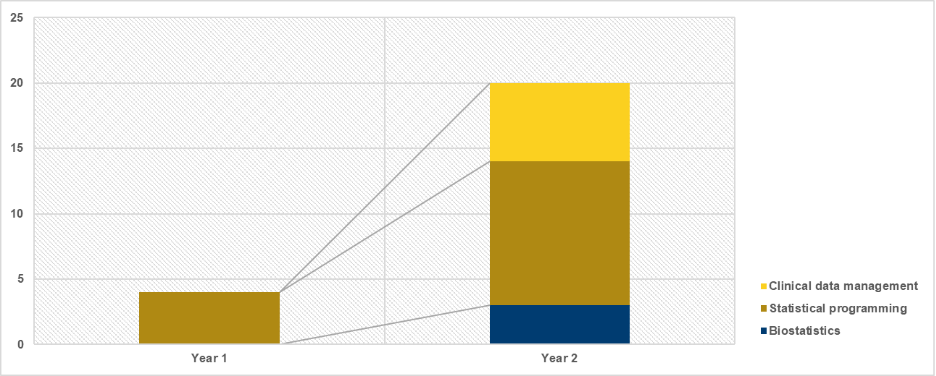
The partnership began with two statisticians, but as the program matured, the team expanded into a fully integrated biometrics group. Over time, more than twenty professionals joined, covering biostatistics, statistical programming, and clinical data management. This wasn’t just about adding numbers; it was about building depth. The team included a mix of mid-level contributors, seasoned leads, and principals, creating a structure that could handle complex deliverables while mentoring newer staff.
Growth was managed deliberately. Ramp-up plans were tied to program forecasts, ensuring resources were available when needed without overextending capacity. Onboarding was thorough, with every team member trained on sponsor SOPs and systems to maintain consistency and compliance. The delivery model combined onshore and offshore talent, giving the sponsor flexibility and cost efficiency while preserving quality standards. Governance provided the backbone—regular reviews and proactive planning kept the team aligned and ready for what came next.
Why It Worked
Several factors made this FSP partnership successful. Flexibility was key: the blended delivery model and willingness to adapt roles allowed the team to scale quickly without disrupting workflows. Responsiveness mattered just as much. Weekly governance meetings and study-level check-ins created a rhythm that kept priorities clear and issues resolved before they became problems. And trust grew from performance. By consistently meeting expectations, the team earned confidence, which led to broader responsibilities, including introductions to other functional groups.
Results That Matter
The impact was clear. What started as a statistics-only engagement evolved into a comprehensive biometrics solution, adding data management and programming to the mix. Operations were fully integrated with sponsor systems, supported by disciplined governance and transparent communication. The micro-FSP approach, where team members took on multiple roles, proved its value, sustaining productivity and delivering flexibility that the sponsor could count on.

Lessons for Biometrics Leaders
This partnership shows how steady teamwork and clear communication can turn a small engagement into a dependable solution. It started with two statisticians learning the systems and grew as new needs emerged—adding data management and programming, sharing knowledge, and supporting each other through change.
There was no big reveal or dramatic shift. Success came from listening, checking in regularly, and stepping up when needed. Weekly meetings kept everyone aligned, and when priorities moved, the team adjusted without fuss. Over time, that consistency built trust and opened doors to broader collaboration.
If you’re looking for a biometrics partner that values straightforward collaboration and reliable delivery, explore our FSP and Standalone solutions. We’re ready to support your goals with the same focus on quality and adaptability.