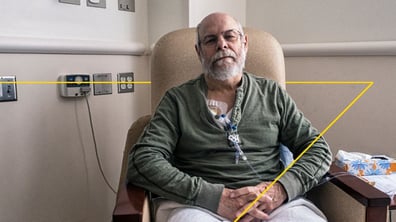
In biomarker-driven oncology, delays aren’t an option. Precision’s white-glove service turned a stalled Phase 1 trial into a success story, restoring momentum and earning a second opportunity from the sponsor.
In a trial where biology sets the pace—target expression informs the science even when not used for eligibility—timing is everything. When the Sponsor’s Phase 1 study began to stall, Precision was asked to step in and restore momentum. The team didn’t rely on templates or bravado; instead, they rebuilt the startup plan to reflect the sponsor’s priorities, streamlined documentation, and embedded lab leadership into governance calls. Within weeks, activation was secured, enrollment followed immediately, and database lock held firm despite late-stage hurdles. Each milestone reinforced trust, and that trust opened the door to a second study.
|
Therapeutic Area |
Oncology |
|
Indication |
Solid Tumors |
|
Study Phase |
Phase 1 |
|
Number of Patients/Sites |
33 Patients, 7 Sites (United States-only) |
|
Study Design |
Dose Escalation/Expansion |
|
Project Mandate |
Full Service Clinical and Labs |
|
Clinical Products |
Biostatistics, Clinical Operations, CSAI, Data Management, Medical Writing, Patient Safety, Regulatory, Project Management |
Overcoming Delays in Biomarker-Driven Oncology Trials
When Precision joined the project, the study was in a holding pattern. Feasibility had started, but no sites were active, and timelines were tightening. For a biomarker-driven design, that’s a serious risk. Every step, from lab workflows and screening logistics to site readiness had to move in sync to keep the schedule intact.
The sponsor had begun feasibility with another CRO, but progress stalled. No sites were activated, and timelines were slipping against aggressive first patient in goals. Precision’s role wasn’t just to take over; it was to restore momentum without creating disruption. That meant understanding what had been done, what was still pending, and where the real bottlenecks were. The team entered early, tasked with safeguarding the integrity of a complex, biology-driven design.

Seamless CRO Change for On-Time Study Activation
The sponsor needed a transition that felt seamless, not disruptive. That meant picking up where another CRO left off, understanding what had been promised, and making sure nothing fell through the cracks. They had great site relations independent of any CRO, but this is still a biomarker-driven trial that was getting a late start.
The clock was ticking. Sites had to be activated quickly, and the first patient was waiting. This wasn’t a study where you could buy time with extra meetings or layers of process. Every day mattered because the design was biomarker-driven. Lab turnaround and site readiness had to move in sync, or the whole timeline would slip.
The goals were straightforward but demanding:
- Transition without disruption.
- Activate sponsor-selected sites quickly and compliantly.
- Integrate lab workflows per protocol (safety panels, sample handling, exploratory analyses).
- Coordinate HHLA2 tissue assessment for Cohort 4+ and backfill (per protocol; not an eligibility gate).
- Maintain discipline through database lock and outputs.
In short, we had to rescue the study without making the rescue the story. The goal was simple: deliver milestones on time and give the sponsor confidence that the trial was back on track.
Convergence in Action
Lab results do not become available at a turn of a dime,” explains Karen Stokes." There's a process when it comes to labs, involving receipt, accessioning, lab run, QC at each step and results reporting.
To make everything work as easily as possible, “the lab PM was basically another functional lead on our projects, and that's what we did from the very beginning,” said Stokes. “The lab PM would join the sponsor team calls. The lab PM would also have breakout calls with the sponsor translation people for more detailed, nuanced type of discussions.” Lab timelines covered protocol‑required analyses; HHLA2 tissue assessment, where applicable (**Cohort 4+ and backfill**), was coordinated without gating baseline eligibility.
Key Milestones


Integrated Operations: White-Glove Collaboration
Precision deployed a white glove model designed for speed and substance. This wasn’t cosmetic service; it was a deliberate framework that combined human calibration with operational rigor.
Fit for Purpose Planning
Startup documents were re-engineered to reflect sponsor priorities. Redundant sections were removed, and templates were streamlined to eliminate unnecessary review cycles. The result was lean documentation that moved through approvals quickly, signaling to the sponsor that their time was respected, and their expectations understood.
Site Activation
The sponsor had existing site relationships and wanted to do their own feasibility work, but we were scoped to do it. In the end, we were able to leverage our network of sites with theirs, choosing locations with which the Sponsor had a connection and with which we had an existing relationship, eliminating some of the prework that could exist with a site unknown to us. Feasibility was “low impact for us,” explains Karen Stokes. “So, it was just us starting with sites that we knew had undergone feasibility and then keeping them going.”
Governance Recalibration
Biomarker trials hinge on lab performance, so Precision elevated the lab project manager to a functional lead role. This individual joined governance calls, took part in decision making, and ensured that biomarker workflows were integrated into the clinical timeline. By embedding lab leadership into the core operating model, Precision created a single lane for resolving scientific and operational questions in real time.
Communication Discipline
Every update was concise, cadence was predictable, and escalation paths were clear. Instead of long email chains or ambiguous status reports, the sponsor received actionable summaries that kept decisions moving. This clarity reduced latency and built trust—a critical currency in high-stakes, early-phase research.
Operational Rigor
Behind the scenes, the team maintained strict permissions hygiene, milestone dashboards, and risk logs. These controls ensured transparency and audit readiness, while giving the sponsor confidence that governance was not sacrificed for speed.
Moments That Mattered
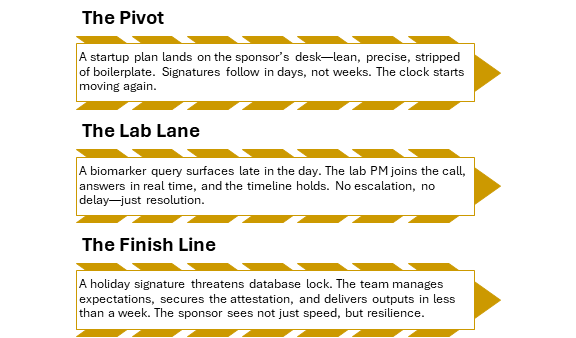

Delivering On-Time Milestones and Sponsor Partnership Expansion
The impact was clear:
- Sites activated ahead of expectations.
- First patient dosed immediately after screening.
- Database lock held firm despite late-stage hurdles, and outputs were delivered within days.
- Sponsor confidence led to the award of a second study built on the same governance and cadence.
These outcomes were not the result of shortcuts. They were the product of an operational framework, aligning teams, governance, and data flow, so science and operations moved in step.
The rescue worked because the plan was practical, and the team stayed aligned. Sites were activated ahead of expectations, and the first patient was ready to screen as soon as activation cleared. That kind of timing doesn’t happen by chance—it happens when lab workflows, site readiness, and sponsor decisions move together.
Database lock came on schedule, even with a late signature that could have caused delays. The team managed it quickly, and outputs were delivered within days. Every milestone landed where it needed to, and the sponsor saw what matters most: Reliability.
That confidence carried forward. The success of this rescue study did more than salvage a timeline. It established a partnership. The sponsor awarded a second study shortly after, confident that Precision could replicate the cadence and governance that made the rescue possible. That trust is the ultimate metric, and it speaks louder than any cycle time chart.
Why Does White-Glove Treatment Matter in Biomarker Trials?
In a biomarker‑informed program, delays compound quickly, especially where sample‑dependent analyses occur alongside early‑phase decision points.
By embedding lab leadership into governance, streamlining and tailoring documentation, and maintaining clear communication, we built a system where scientific and operational decision‑making stayed tightly aligned. That alignment kept milestones on track and reinforced the sponsor’s confidence that the trial was being managed with discipline and transparency.
White-glove service in this context is less about courtesy and more about control. It is the difference between a trial that reacts to problems and one that anticipates them.
Precision for Medicine brings this same level of focus and adaptability to every engagement.
If you’re planning a complex, biomarker driven study or need to recover momentum on a trial that’s at risk, Precision can help you deliver with speed, clarity, and confidence.
-
Explore
Oncology CRO Services
Tomorrow's targeted therapies require a shift away from yesterday's processes. Precision's specialized oncology CRO has integrated and aligned capabilities to efficiently navigate and execute complex clinical trials.Oncology CRO Services
Tomorrow's targeted therapies require a shift away from yesterday's processes. Precision's specialized oncology CRO has integrated and aligned capabilities to efficiently navigate and execute complex clinical trials. -
Explore
.jpg?width=396&height=416&name=iStock-1256323051%20(1).jpg)
Specialty Lab Services
Precision offers a specialized suite of integrated translational and biomarker solutions tailored to the requirements of precision medicine and complex therapeutic development.Specialty Lab Services
Precision offers a specialized suite of integrated translational and biomarker solutions tailored to the requirements of precision medicine and complex therapeutic development. -
Explore

Speak with an Expert
Ready to meet Precision specialists? Tell us about your program and we'll get back to you right away.
Speak with an Expert
Ready to meet Precision specialists? Tell us about your program and we'll get back to you right away.